
Modular BESS Maintenance Checklist for US & Europe: Key to Lower LCOE & Uptime
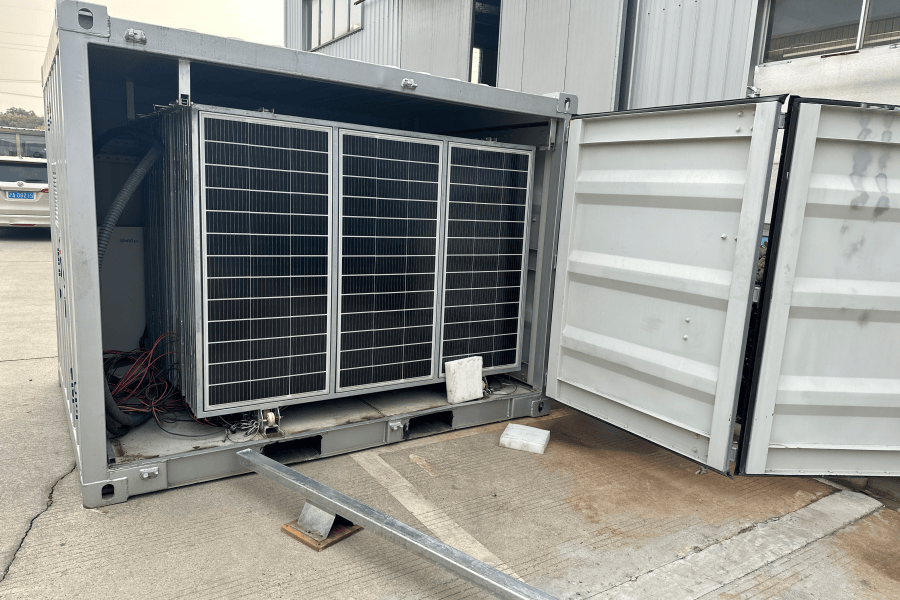
When Your Battery Storage Project's Success Hinges on a Simple Checklist
Honestly, after two decades on sites from Texas to Bavaria, I've seen a pattern. A successful energy storage deployment isn't just about the flashy tech specs at signing. It's about what happens on a rainy Tuesday morning, 18 months into operation, when a technician needs to know exactly what to check on that modular power container sitting in the back of an industrial park. That's where the real value - and too often, the hidden risk - lies. Today, let's talk about a tool more critical than any single component: a robust, actionable maintenance checklist.
Table of Contents
- The Hidden Cost of "Deploy and Forget"
- Beyond the Checklist: The Data Behind Downtime
- A Case in Point: When Checklists Save Millions
- The Expert Take: Decoding the Checklist for Decision-Makers
- Building Your Project with Confidence
The Hidden Cost of "Deploy and Forget"
Here's the common scene in our markets. A commercial or industrial BESS project gets commissioned. The team celebrates, the UL and IEC certificates are framed, and everyone moves on. The O&M manual? It's a 300-page PDF, and the maintenance schedule is a vague line item: "Semi-annual inspection." But what does that actually mean on the ground? I've been called to sites where "maintenance" was just a visual once-over. No torque check on the DC busbars, no calibration of thermal sensors, no log review of the battery management system's (BMS) historical fault data. This isn't maintenance; it's a ticking clock.
The problem amplifies with scalable, modular containers - the very design that makes projects flexible and fast to deploy. You might have 10 containers acting as one system. A small, undetected issue in module #7 - say, a slightly underperforming cooling fan or a creeping voltage imbalance - doesn't cause an immediate shutdown. It silently degrades the entire system's efficiency, increases wear, and chips away at your expected Levelized Cost of Storage (LCOS). You bought the system for resilience and ROI, but without surgical-grade maintenance protocols, you're leaving both on the table.
Beyond the Checklist: The Data Behind Downtime
Let's talk numbers. The National Renewable Energy Laboratory (NREL) has highlighted that operational practices can cause a spread of over 20% in the annual degradation rate of lithium-ion BESS. Think about that. Your asset's lifespan and revenue could vary by a fifth based on how it's cared for. Another study focusing on large-scale systems pointed to inadequate thermal management as a primary contributor to premature aging. This isn't theoretical. On site, I've measured temperature differentials of over 8C between cells in the same rack because airflow paths were blocked by a poorly routed cable - an item a detailed checklist would have caught during a routine inspection.
The core issue is that generic checklists fail. A checklist for a stationary warehouse system isn't fully adequate for a modular, mobile power container designed for diverse environments, like those we've optimized for challenging deployments. The checklist needs to reflect the integrated system reality: power conversion, climate control, structural integrity, and safety interlocks, all in one movable package.
A Case in Point: When Checklists Save Millions
Let me share a scenario from a microgrid project in Northern Germany. They had four modular BESS containers supporting a wind farm. Performance had dipped slightly over two years, but nothing flagged by the high-level alarms. They were using a basic, off-the-shelf maintenance guide. When our team was brought in, we applied a more granular checklist derived from our field-proven protocols - the kind built for rigorous, remote environments. We didn't just check "BMS communication"; we validated the data accuracy of every voltage and temperature sensor against independent readings. We didn't just "inspect cooling"; we measured airflow at vents and cleaned specific filter sections that were causing a 30% reduction in efficiency.
The result? We identified a cluster of cells operating at a higher C-rate than their neighbors due to a calibration drift in the power conversion system. This was accelerating degradation in that module. By catching it early and recalibrating, we extended the projected system life by an estimated 4 years, protecting millions in asset value. That's the power of a checklist built from deep, integrated system knowledge, not just a component list.

The Expert Take: Decoding the Checklist for Decision-Makers
So, what should a decision-maker look for in a world-class maintenance protocol? It's not about length; it's about relevance and actionability. Let's break down three technical terms you'll hear, in plain English.
- Thermal Management Verification: It's not "is the AC on?" It's a series of checks: verifying setpoints vs. actual internal temperatures, ensuring no hot/cold spots across racks, checking condenser coils for debris, and confirming coolant levels (if liquid-cooled). Poor thermal management is the silent killer of battery lifespan.
- Electrical Integrity & C-Rate Validation: This goes beyond "no loose wires." It involves using a thermal camera to scan connections under load, verifying the torque on critical DC connections, and ensuring the system's discharge/charge rate (C-rate) aligns with the designed thermal and degradation models. An unchecked, high C-rate in one module stresses it unnecessarily.
- LCOE/LCOS Focus: Every item on the checklist should tie back to the Levelized Cost of Energy/Storage. Cleaning filters reduces fan energy use (improving LCOS). Catching a failing cell prevents a cascade failure (protecting LCOS). Precision calibration ensures peak efficiency (optimizing LCOS). The checklist is your primary LCOS defense tool.
At Highjoule, our approach has been to bake this thinking into our containerized solutions from the start. Our mobile power units designed for tough, off-grid jobs come with maintenance protocols that are as detailed as the engineering drawings. We design access panels where you actually need them, integrate monitoring points for key measurements, and provide checklists that are task-based for the technician, not just box-ticking for the file. Because we know that our reputation - and your project's success - depends on that container performing flawlessly for 15+ years.
Building Your Project with Confidence
The takeaway? When evaluating BESS providers or O&M partners for your next project in the US or Europe, dig into the maintenance plan. Ask to see a sample checklist. Does it look like a generic form, or does it reflect a deep understanding of how their specific modular system ages and behaves? Does it include conditional tasks based on operational data? Is it built for the locale's standards and climate?
The right checklist is a sign of maturity. It shows a vendor has moved beyond just selling hardware to truly understanding its lifecycle. It turns the abstract promise of a 20-year warranty into a tangible, executable plan. So, what's the first item on your current system's checklist, and does it tell you everything you need to know?
Tags: BESS Maintenance UL Standards LCOE Reduction Modular Energy Storage US Europe Energy Market
Author
James Zhang
20+ years agricultural energy storage engineer / Highjoule CTO