
Manufacturing Standards for Black Start PV Container in Coastal Salt-Spray Environments
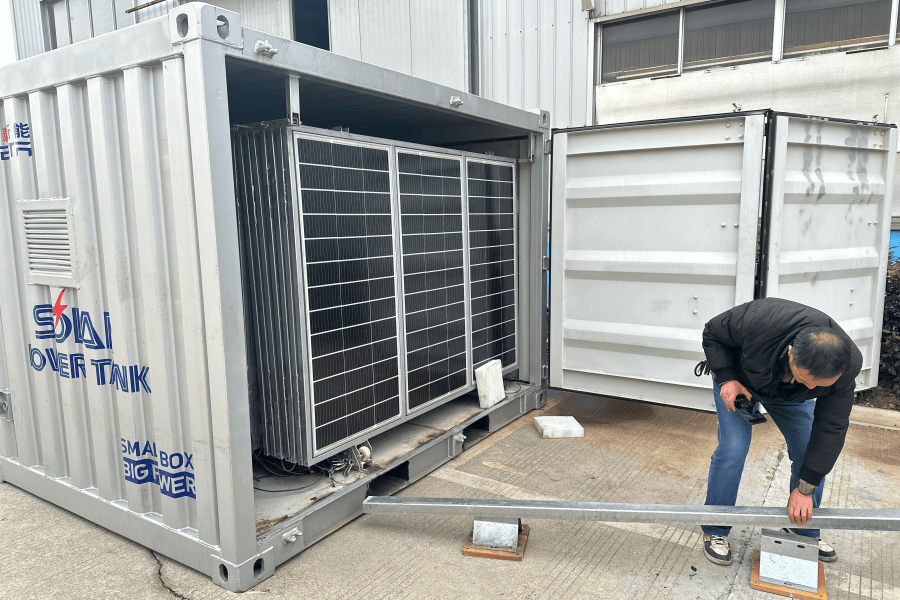
Table of Contents
- The Silent Corrosion: A Coastal Project's Hidden Enemy
- Beyond Basic Standards: Why "Ruggedized" Isn't Enough
- The Black Start Imperative in Microgrids
- The Highjoule Approach: A Standard, Not an Option
- Your Next Step: Questions to Ask Your Provider
The Silent Corrosion: A Coastal Project's Hidden Enemy
Let's be honest. When you're planning a solar-plus-storage project for a coastal industrial site or a seaside microgrid, the big numbers get all the attention: the megawatt-hours, the C-rate, the levelized cost of energy (LCOE). But having spent over two decades on sites from the North Sea to the Gulf of Mexico, I can tell you the biggest threat to your project's 20-year ROI often isn't in the spreadsheet. It's in the air. That salty, humid, corrosive air that eats away at everything from conduit to control boards, silently turning a capital asset into a maintenance nightmare.
I've seen this firsthand. A project in Florida C a beautifully engineered BESS meant to provide peak shaving C started showing communication faults within 18 months. The culprit? Salt spray creep had compromised unsealed RJ45 connectors on the inverter monitoring system. The fix cost wasn't astronomical, but the downtime and eroded client confidence? Priceless. This isn't an isolated case. The National Renewable Energy Laboratory (NREL) has documented how coastal environments accelerate corrosion rates by 3x to 5x compared to inland sites, directly impacting system availability and longevity.

Beyond Basic Standards: Why "Ruggedized" Isn't Enough
Many providers will tell you their container is "built for harsh environments." The problem is, that's a marketing term, not a manufacturing standard. An IP55 rating on the enclosure is a good start, but it's a snapshot test. Coastal salt-spray is a relentless, 24/7/365 assault. It's about:
- Material Science: Are busbars and structural components using aluminum alloys with specific marine-grade anodization or stainless-steel grades (like 316L) that resist pitting? Off-the-shelf steel with a standard paint coat won't cut it.
- Sealing Strategy: It's not just about gaskets. It's about creating a positive pressure environment inside the container with filtered air intakes to keep the corrosive atmosphere out. All cable penetrations need to be hermetically sealed, not just stuffed with gland fittings.
- Thermal Management, Re-imagined: Here's a key insight. In a salt-spray environment, an air-to-air heat exchanger can actually draw in corrosive elements. A sealed, liquid-cooled thermal management system isn't just about battery temperature optimization for C-rate performance; it's a critical barrier, isolating the precious battery racks and power electronics from the external atmosphere entirely. This directly protects your asset and maintains its ability to deliver those high-power bursts when the grid calls for it.
This is where true manufacturing standards come in. We're not just talking about building to a generic UL 9540 for the BESS unit. We're talking about the entire pre-integrated PV container C the structure, the climate control, the wiring, the safety systems C being designed, tested, and certified as a unified system for a specific environmental duty: coastal salt-spray.
The Black Start Imperative in Microgrids
Now, layer on the requirement for black start capability. This isn't just a nice-to-have for remote microgrids; it's a core resilience mandate for critical coastal infrastructure like ports, water treatment plants, and offshore support hubs. The system must be able to self-energize from a completely dead state, create a stable voltage and frequency "island," and then sequence other loads and generation online.
The manufacturing standard for this is unforgiving. It demands ultra-reliable, corrosion-protected components for the black start engine (often a dedicated battery system within the BESS), the power conversion system (PCS), and the control logic. A single point of failure in a salty, humid control cabinet can render the entire black start function useless during the storm when you need it most. The standard must encompass the functional resilience of these sub-systems within the harsh environment, not just their individual durability.
The Highjoule Approach: A Standard, Not an Option
At Highjoule, we stopped treating coastal protection as an optional add-on years ago. For projects designated for salt-spray zones, our Manufacturing Standards for Black Start Capable Pre-integrated PV Container for Coastal Salt-spray Environments is the baseline. This isn't a secret document; it's our commitment, and it's built on pillars our clients in Europe and North America demand:
- UL & IEC Compliance as a Foundation: The entire system nestles within the frameworks of UL 9540, UL 9540A, IEC 62933, and IEEE 1547 for grid interconnection. But we go further, specifying component-level certifications like UL 1642 for cells and employing IEC 60068-2-52 salt mist chamber testing for critical assemblies.
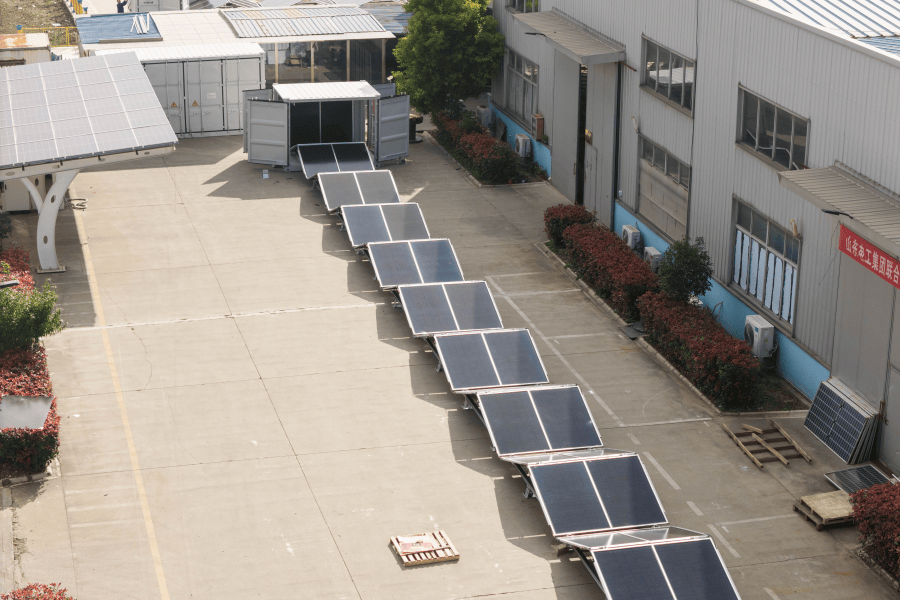
- Pre-Integrated, Pre-Validated: The PV combiners, the BESS, the PCS, the black start module, the liquid cooling unit C they're all integrated and wired in a controlled factory environment. This means every seal, every cable run, and every communication link is validated before it ships. On site, you're not debugging communication between disparate systems in the rain and salt air; you're connecting pre-tested utility interfaces. This slashes commissioning time from weeks to days, a huge deal for project finance.
- LCOE Optimized for the Long Haul: Honestly, our initial unit cost might be higher than a bare-bones container. But that's the wrong metric. By designing out corrosion-related failures and ensuring black start reliability, we dramatically reduce operational expenditures (OpEx) and maximize availability over the system's life. This lowers the true Levelized Cost of Energy (LCOE) for the asset owner. You're buying energy security and predictable cost, not just a box of batteries.
A case in point: a microgrid project we supported in the Scottish Highlands, a notoriously harsh coastal environment. The challenge was providing resilient power for a fisheries research station with frequent grid outages. The pre-integrated container, built to our coastal standard, was deployed on a concrete pad just 300 meters from the sea. Two winters later, with multiple successful black start events triggered by storms, the internal inspection showed zero corrosion on electrical components. The station's operations manager told me his peace of mind was the ultimate ROI.
Your Next Step: Questions to Ask Your Provider
So, when you're evaluating a solution for your coastal site, move beyond the data sheet. Have a coffee with their engineering lead, or better yet, someone who's been on site for deployments. Ask them:
- "Can you show me the specific test reports for salt spray corrosion (IEC 60068-2-52) for your container's structural and electrical assemblies?"
- "How is the black start subsystem physically and environmentally protected within the main container?"
- "Walk me through the sealing methodology for all external penetrations on your pre-integrated design."
- "What is the expected maintenance interval for corrosion protection on your busbars and connections in a C5-M environment per ISO 12944?"
The answers will tell you if you're buying a product built to a marketing bullet point, or to a manufacturing standard designed for the real world. Because in our world, the standard is what stands between a successful project and a salty, expensive problem.
Tags: UL Standard BESS Coastal Energy Storage Black Start Salt-Spray Protection IEC Standard Pre-integrated Container Manufacturing Standards
Author
James Zhang
20+ years agricultural energy storage engineer / Highjoule CTO