
Scalable Modular Mobile Power Containers: The Ultimate Guide for Military Base Energy Security

The Ultimate Guide to Scalable Modular Mobile Power Containers for Military Bases
Hey there. Let's talk about something I've wrestled with for two decades on sites from the California desert to remote European outposts: keeping the lights on and the mission-critical systems running, no matter what. The conversation around energy security for military installations has moved far beyond backup generators. It's about creating a resilient, adaptable, and intelligent energy backbone. And honestly, I've seen the frustration when legacy approaches fall short. That's why we need to talk about the game-changer: scalable, modular mobile power containers.
Quick Navigation
- The Real Problem: More Than Just Backup Power
- The Agitating Truth: The Hidden Costs of Getting It Wrong
- The Solution: Why Modular & Mobile is the Only Logical Answer
- Key Considerations for Your Deployment
- A Real-World Glimpse: How It Actually Works
- Where Do You Start?
The Real Problem: More Than Just Backup Power
Forget the simple notion of a "backup system." Modern military bases are complex micro-cities. The challenge is threefold. First, inflexibility. Traditional, fixed BESS installations are like poured concrete - expensive to change if your energy needs evolve (and they always do). Second, deployment speed. A multi-year construction project for energy infrastructure isn't viable when threats or operational requirements shift quarterly. Third, and this is a big one from my site visits, resilience against complex threats. We're not just planning for a grid outage; we're planning for cyber-physical threats, fuel supply chain disruptions, and the need for silent watch operations.
The Agitating Truth: The Hidden Costs of Getting It Wrong
I've seen firsthand what happens when the solution doesn't fit the problem. A base commander once told me about a "state-of-the-art" fixed storage system that became obsolete before commissioning was complete because mission profiles changed. The financial sinkhole was massive. According to the National Renewable Energy Laboratory (NREL), poor system design and integration can inflate the Levelized Cost of Energy Storage (LCOE) by up to 30% over the project's life. Think about that: nearly a third of your investment, wasted.
But the cost isn't just financial. It's operational. Diesel convoys for generator fuel are a vulnerability. Inefficient thermal management in a poorly designed container can degrade battery life by 40% in high-heat environments, meaning your 10-year asset needs replacing in six. That's not just a budget line item; it's a mission risk.
The Solution: Why Modular & Mobile is the Only Logical Answer
This is where the paradigm flips. A scalable, modular mobile power container isn't a product; it's a strategy. Imagine a standardized, self-contained unit - fully tested, certified to UL 9540 and IEC 62933 standards before it even arrives on a flatbed truck. Need more power? You don't redesign the system; you add another identical module. Mission changes and you need to relocate capacity? You disconnect and move it. It turns capital expenditure into tactical, flexible capability.
At Highjoule, we build these containers based on lessons from hundreds of deployments. The core philosophy is "plug-and-play resilience." Each unit is its own ecosystem with integrated fire suppression, climate control that can handle -30C to 50C, and cybersecurity-hardened controls. This isn't theoretical; it's what lets you sleep at night knowing the energy system won't be the point of failure.
Breaking Down the Tech (In Plain English)
Let's demystify two critical specs:
- C-Rate: Simply put, it's how fast you can charge or discharge the battery. A 1C rate means you can use the full capacity in one hour. For critical military loads where you need a huge surge of power instantly (like firing up a radar array), you need a high C-rate. Our modules are engineered for high pulse capability without sacrificing cycle life.
- Thermal Management: This is the unsung hero. Batteries are like athletes; performance plummets if they overheat or get too cold. A passive cooling system might cut it in mild Germany, but in the Arizona sun? You need an active, liquid-cooled system with redundant loops. I've opened up containers after five years in desert climates, and the difference in battery degradation between good and bad thermal design is staggering.
Key Considerations for Your Deployment
When evaluating mobile power containers, here's my checklist from the field:
A Real-World Glimpse: How It Actually Works
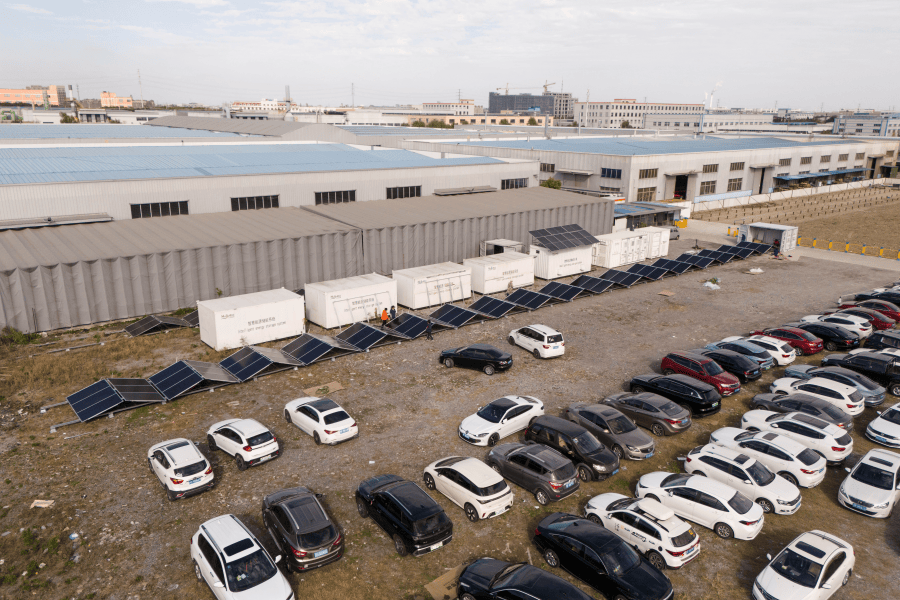
Let's look at a recent project for a forward-operating base concept in Europe. The challenge was creating a rapidly deployable microgrid that could integrate existing solar, a legacy diesel generator, and provide 72 hours of critical load coverage during a complete disconnect. The fixed-quote, multi-year timeline from conventional vendors was a non-starter.
The solution was three of our pre-certified modular containers. They were shipped, connected to pre-laid cabling and the existing generation assets, and were fully operational in under 12 weeks. The system's controller manages the dispatch automatically, prioritizing solar, using storage to shift energy and run the diesel genset only at its most efficient point, cutting fuel consumption by over 60%. If the base needs to scale or relocate, the containers go with it.
Where Do You Start?
The biggest mistake is thinking you need to have the entire 20-year master plan figured out before step one. You don't. The power of modularity is that it lets you start with your most acute pain point - maybe it's stabilizing a weak grid connection for a new cyber facility, or providing black-start capability for a hangar. You deploy one container, solve that problem, and build from there. It de-risks the entire process.
So, what's the one energy resilience headache keeping you up right now? Is it the vulnerability of a fuel line, the cost of a planned infrastructure upgrade, or the need to power a new, remote sensor array? Start there. The beauty of this technology is that the solution is as mobile and adaptable as the threats you face.
Tags: UL Standard Microgrid Energy Resilience Mobile Power Container Military Energy Security Modular BESS
Author
James Zhang
20+ years agricultural energy storage engineer / Highjoule CTO