
Step-by-step Installation of Tier 1 Battery Cell Off-grid Solar Generator for Military Bases: A Field Engineer's Guide
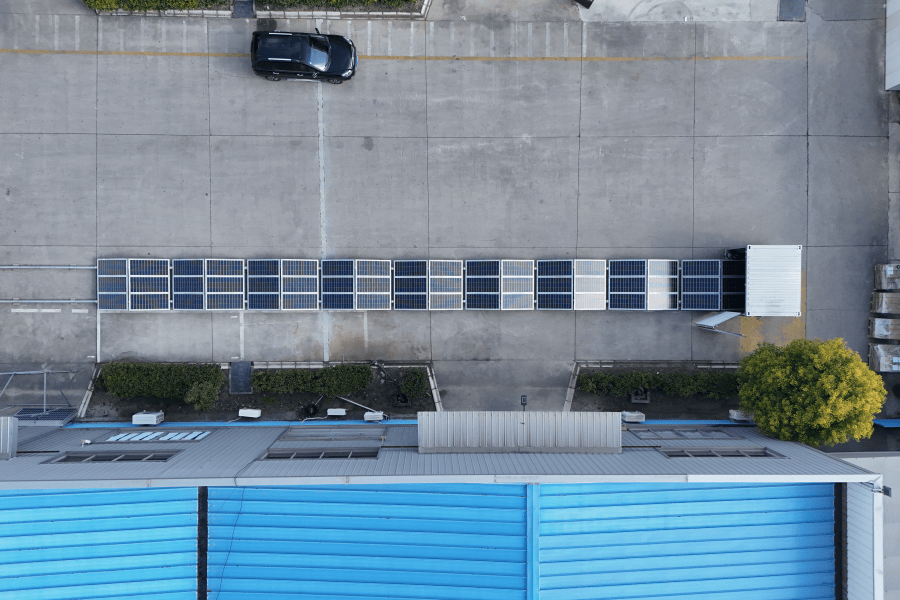
From Blueprint to Boots on the Ground: Installing Off-grid Power for Critical Operations
Hey there. Let's talk about powering places where the grid isn't an option - or worse, a liability. Over two decades, from remote industrial sites to community microgrids, I've seen the good, the bad, and the downright dangerous in off-grid energy storage. But few projects demand the level of precision, reliability, and sheer ruggedness as those for military bases. Honestly, it's a different ball game. The stakes aren't just about ROI; they're about operational readiness and personnel safety.
This isn't about slapping some solar panels next to a generic battery container. It's about a meticulous, step-by-step process to deploy a system built with Tier 1 battery cells that can withstand the test of time, elements, and mission-critical demand. Let me walk you through what that really looks like on the ground.
Quick Navigation
- The Real Cost of "Just Making It Work"
- Step 1: It's All in the Planning (Before the First Truck Arrives)
- Step 2: The Foundation: More Than Just Concrete
- Step 3: Mechanical & Electrical Integration: The Heart of the System
- Step 4: Commissioning: The Proof is in the Performance
- Why Tier 1 Cells & Proper Installation Aren't Just Nice-to-Haves
The Real Cost of "Just Making It Work"
The pressure is immense. You need resilient, off-grid power for communications, surveillance, or remote base operations. The temptation is to fast-track deployment, maybe compromise on cell quality or skip a few "non-essential" compliance checks to meet a deadline. I've seen this firsthand on site, and it's a recipe for three things:
- Hidden Capex: Systems with lower-tier cells often have a shorter lifespan and higher degradation rates. According to NREL analysis, the choice of battery cell and system design can impact long-term Levelized Cost of Storage (LCOS) by 30% or more. You might save upfront, but you're buying yourself a major replacement cost down the line.
- Safety Liabilities: Military sites can't afford thermal runaway events. Proper installation isn't just about function; it's about integrating thermal management, fire suppression, and containment that meets strict UL 9540A and IEC 62933-5-2 standards. This isn't an area for shortcuts.
- Operational Failure: An off-grid system that fails during a critical weather event or exercise isn't just broken equipment; it's a failed mission. The reliability is baked in during the installation phase - from torque specs on busbars to the calibration of the energy management system (EMS).
Step 1: It's All in the Planning (Before the First Truck Arrives)
This is where we set the stage for success. It goes beyond site surveys.
- Compliance Mapping: Every base and region has its own codes. We're aligning with IEEE 1547 for interconnection (for any hybrid capability), NFPA 855 for fire safety, and of course, the full suite of UL standards for the BESS itself. At Highjoule, we treat this as a checklist that gets signed off by our local engineers and your team.
- Logistics & Hardening: We're planning access routes for heavy equipment, considering EMI/RFI shielding needs for sensitive military electronics, and specifying outdoor-rated, corrosion-resistant enclosures from the get-go. I remember a project in a coastal California base where the salt spray specification for our containerized BESS was a non-negotiable, driven by this phase.
Step 2: The Foundation: More Than Just Concrete
You'd be surprised how many issues stem from a poor foundation. For a military-grade off-grid solar generator, it's not just a slab.
We're ensuring perfect leveling to prevent stress on the battery rack structure, incorporating cable trenches or conduits for protected routing, and often, designing for seismic bracing if required. The foundation also includes the mounting for the solar array, which needs to be engineered for high wind loads. This step is boring, until it's not - and then it's catastrophic.
Step 3: Mechanical & Electrical Integration: The Heart of the System
Now the Tier 1 battery cell packs, the inverters, and the control systems arrive. This is a ballet of precision.
- Cell & Rack Installation: Each battery module, built with top-tier manufacturer cells (think consistently high energy density and proven cycle life), is placed into its rack with specific torque settings. The interconnections are made with meticulous attention to avoid any stray resistance, which creates heat. The thermal management system - whether liquid or advanced air-cooling - is integrated and tested for even distribution.
- Electrical Hookup: This is where the one-line diagram becomes reality. DC wiring from the PV array, AC coupling to any backup generators, and the critical grounding system are all installed. We use megohmmeters to test insulation resistance before anything is energized. The Battery Management System (BMS) and the broader EMS are connected, ensuring they can "talk" to each other and the solar inverters flawlessly.

Step 4: Commissioning: The Proof is in the Performance
This is the most critical phase. We're not just turning it on. We're validating every single function under controlled, then real, conditions.
We run capacity tests to confirm the system delivers the promised kWh. We simulate grid failures (or, in off-grid terms, simulate a sudden drop in solar input) to test the seamless pickup by the BESS. We stress-test the thermal management by running the system at high C-rates - that's the rate of charge/discharge - to ensure temperatures stay within the strict window that Tier 1 cells are designed for. Finally, we do a full system acceptance test with the base's operations team, training them on the interface and normal/abnormal indicators.
Why Tier 1 Cells & Proper Installation Aren't Just Nice-to-Haves
Let's get technical for a moment, in plain English. Choosing Tier 1 cells for a military base application is about predictable chemistry and manufacturing rigor. These cells have the data sheets to back up their cycle life, safety, and performance claims. When I'm on site commissioning, I can see the difference in the consistency of voltage across hundreds of cells in a string. That consistency is what gives you a stable system a decade from now.
And that's the real goal, isn't it? You're not buying a battery; you're buying years of guaranteed, silent, off-grid power. The step-by-step installation process is the guarantee on that promise. It ensures the elegant engineering of the Tier 1 cells is fully realized in the harsh, real world.
At Highjoule, our approach is built around this lifecycle view. Our BESS platforms are designed with these installation steps in mind, pre-integrated where it makes sense to reduce field labor, but never pre-compromised on accessibility for service or inspection. Because after the coffee is gone and we've left the site, that system has to work, day in, day out, with no excuses.
What's the one compliance or site challenge you're wrestling with for your next off-grid project?
Tags: UL Standard BESS Tier 1 Battery Cells Off-grid Solar IEEE Standards Military Energy Security Energy Storage Installation
Author
James Zhang
20+ years agricultural energy storage engineer / Highjoule CTO