
The All-in-One Off-Grid Solar Generator for Construction Sites: A Power Solution That Actually Works
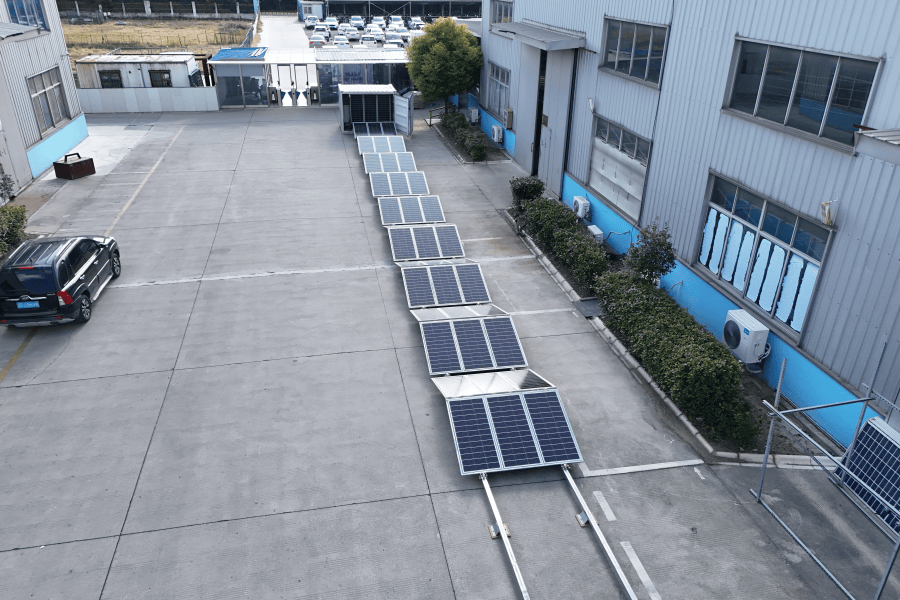
Table of Contents
- The Real Problem Isn't Just Power, It's Predictability
- Why the Old Solutions Are Failing Us Now
- The All-in-One Advantage: More Than Just a Box
- Looking Beyond the Spec Sheet: What Really Matters On Site
- Making the Right Choice for Your Project
The Real Problem Isn't Just Power, It's Predictability
Hey there. Let's be honest for a minute. When you're managing a construction site in Texas, Germany, or anywhere really, your biggest headache isn't usually the blueprints or the schedule. It's the simple, fundamental need for reliable, always-on power. I've been on enough muddy, remote, or just plain complicated sites to know the drill. You're staring down a deadline, your crew is ready to go, and you're held hostage by two things: the unreliable local grid or the deafening, expensive, and fume-belching diesel generator.
The problem we're really talking about here is predictability. A study by the National Renewable Energy Laboratory (NREL) highlighted that construction site delays often cascade from these basic utility hurdles. It's not just about cost - though, honestly, the volatility of diesel prices alone can blow a budget - it's about control. You need to know that the lights, the tools, and the critical equipment will run without a surprise outage that costs you thousands per hour in idle labor.
Why the Old Solutions Are Failing Us Now
So, we've traditionally turned to diesel gensets. They're familiar, right? But on-site, the romance fades fast. The fuel logistics are a nightmare - theft, spillage, constant refueling runs. The noise complaints from neighbors can halt operations. And then there's the emissions angle. More and more municipalities, especially in Europe and progressive US states, are imposing strict idle and emission regulations. Suddenly, your "reliable" generator becomes a compliance liability.
And what about tying into the grid? If it's even available, the process is slow and costly. Permitting, transformer upgrades, demand charges... I've seen projects wait 6 months just for a connection. In today's market, that's simply not feasible. This is the agitation point: sticking with the old way doesn't just mean higher operating costs (your Levelized Cost of Energy, or LCOE, goes through the roof), it means accepting massive project risk.
The All-in-One Advantage: More Than Just a Box
This is where the conversation around an all-in-one integrated off-grid solar generator gets real. We're not just talking about slapping some solar panels on a battery. I'm talking about a pre-engineered, containerized or skid-mounted system that combines solar generation, battery storage, power conversion, and advanced management into a single, plug-and-play unit. It's delivered to your site, and it's designed to work, out of the box.
Let me give you a real case. We worked with a contractor on a utility-scale solar farm build-out in California. Ironic, right? Building a solar farm, but the temporary construction power was all diesel. The challenge was the remote location and the client's own sustainability mandate. They couldn't very well build a green asset with dirty power. We deployed a 500kWh all-in-one BESS unit, paired with a temporary solar canopy. The result? They cut diesel use by over 90% during peak sun hours, eliminated the daily fuel truck traffic, and met their own decarbonization goals for the construction phase. The system was UL 9540 certified, which sped up the site safety permitting immensely.

Breaking Down the "All-in-One"
When comparing these systems, here's what you should look for in the integration:
- The Brain (EMS): A built-in Energy Management System that autonomously decides when to draw from solar, when to use the battery, and when to (if needed) supplement with a small, efficient backup generator. This intelligence is what maximizes fuel savings.
- The Heart (Battery & Thermal Management): Not all batteries are suited for the harsh, dusty, and variable-load environment of a site. You need robust cells and a thermal management system that can handle a Texas summer or a German winter without breaking a sweat. This is non-negotiable for safety and longevity.
- The Muscle (Inverter/Charger): This needs to power everything from sensitive computers to high-surge equipment like welders or crane motors. Look for high C-rate capability - simply put, it's the system's ability to discharge power quickly for those big, hungry tools without damaging the battery.
Looking Beyond the Spec Sheet: What Really Matters On Site
Any supplier can give you a datasheet. My 20 years on site tell me the decision is made on other factors. First, standards and compliance. In the US, you need UL 9540 for the energy storage system and UL 1741 for the inverter. In the EU, it's IEC 62619. This isn't paperwork; it's your insurance policy. I've seen projects delayed for months because the equipment wasn't certified for the local jurisdiction.
Second, think about service and support. What happens when something needs a tweak? A system from a vendor with a local network, like Highjoule's partner model across North America and Europe, means you have an expert on the phone or on-site fast. We design our systems with modularity in mind - if a component needs service, you swap a module, don't ship the whole container back.
Finally, consider the total cost of operation, not just the capital cost. A cheaper unit with poor thermal management will degrade its battery 30% faster, meaning you'll replace it sooner. A well-designed all-in-one system slashes your LCOE by nearly eliminating fuel and reducing maintenance to almost zero. It's an operational expense game-changer.
Making the Right Choice for Your Project
So, when you're comparing these all-in-one integrated off-grid solar generators, move beyond the basic "kWh and kW" comparison. Ask the harder questions: What's the expected cycle life under my specific load profile? How does the thermal system truly perform at 95F (35C)? Can you show me the UL/IEC certification for the entire assembled system, not just the parts? What does the remote monitoring look like - can I see my fuel savings and system health from my office?
The right solution gives you back predictability. It turns your temporary power from a major cost center and risk into a quiet, clean, and reliable asset. It lets you focus on building your project, not managing your generator. What's the one power-related delay you could eliminate on your next site if you had the right self-contained system from day one?
Tags: UL Standard BESS Energy Storage Off-grid Power Construction Solar Generator
Author
James Zhang
20+ years agricultural energy storage engineer / Highjoule CTO