
20ft Containerized BESS for Rural & Off-Grid Power: A Case Study from the Philippines
When the Grid Ends: Powering Remote Communities with Containerized Storage
Honestly, after two decades on the ground from Texas to Tanzania, I've learned one thing: the most challenging energy problems often have the most elegant solutions. It's not always about the biggest grid or the highest power output. Sometimes, it's about delivering reliability where it's needed most, under the toughest conditions. Recently, a project in the Philippines - a 20ft high-cube lithium battery storage container for rural electrification - caught my attention. It's a perfect case study that holds powerful lessons, not just for emerging markets, but for anyone in the US or Europe dealing with remote industrial sites, microgrids, or grid-edge resilience. Let's talk about why.
Quick Navigation
- The Real Problem: It's More Than Just "No Grid"
- Why Containerized BESS Makes Sense for Tough Jobs
- The Philippines Case: A Real-World Blueprint
- Lessons for Everyone: Safety, Cost, and Simplicity
- Thinking About Your Project?
The Real Problem: It's More Than Just "No Grid"
When we think "off-grid" or "remote," the immediate thought is lack of connection. But the real pain points run deeper. I've seen this firsthand on sites where diesel generators are the only lifeline. The cost is staggering - not just for fuel, but for transport and maintenance. The noise and emissions are a constant issue. And the reliability? Let's just say I've spent more than a few nights troubleshooting a genset in the rain.
For commercial and industrial players in remote locations - think mining operations, agricultural processing, or even a new data center on the edge of the network - this uncertainty is a direct hit to the bottom line. According to the International Energy Agency (IEA), achieving universal energy access requires a massive scale-up of decentralized solutions, with solar PV coupled with battery storage being a cornerstone. But deploying these systems in harsh, remote environments isn't a plug-and-play game. You need something rugged, self-contained, and incredibly dependable.
Why Containerized BESS Makes Sense for Tough Jobs
This is where the standard 20ft or 40ft shipping container format shines. It's a global, modular building block. At Highjoule, we don't just see a box; we see a pre-fabricated power plant. The entire system - lithium-ion battery racks, thermal management, fire suppression, power conversion systems (PCS), and controls - is integrated and tested in a controlled factory environment. This is a game-changer.
Think about it: instead of shipping dozens of individual components to a site with limited skilled labor, you ship one unit. It gets dropped by a standard truck and crane, and the site work is primarily about connecting AC and DC cables. It dramatically reduces deployment time and "site-risk." The container itself provides a robust, weatherproof, and secure enclosure from day one.

Key Tech in the Box: It's All About Balance
Let's get a bit technical, but I'll keep it simple. The magic inside isn't just the batteries. It's how they're managed.
- Thermal Management: This is non-negotiable. Lithium batteries perform best, and last longest, within a tight temperature range. In the Philippines' heat or a cold Scandinavian winter, the internal HVAC system is the unsung hero, maintaining that perfect climate. Poor thermal management is the fastest way to kill a battery's lifespan.
- C-rate Considerations: This is basically the "speed" of charging and discharging. For a rural microgrid that might see a sudden surge when everyone turns on lights at dusk, you need a battery that can discharge at a high enough C-rate to meet that demand without breaking a sweat. The system design has to match the local load profile.
- Levelized Cost of Energy (LCOE): This is the big one for decision-makers. It's the total lifetime cost of the system divided by the energy it produces. By combining solar with a containerized BESS, you slash fuel costs and generator wear-and-tear. The initial CapEx might be higher than a few diesel gensets, but over 10-15 years, the LCOE tells a completely different, and much more profitable, story.
The Philippines Case: A Real-World Blueprint
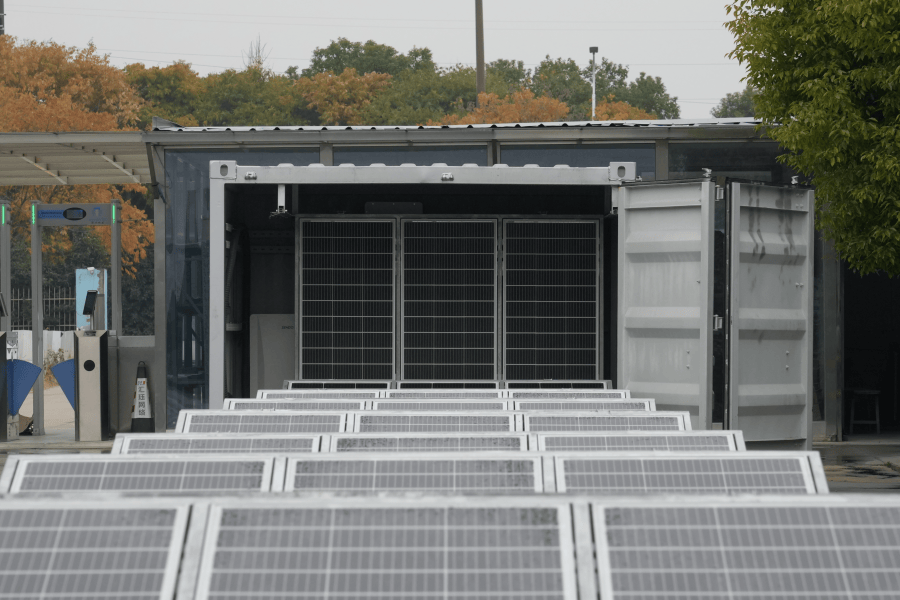
The project involved deploying a 20ft High Cube container with a 500kWh lithium iron phosphate (LFP) battery system to a cluster of remote villages. The challenge was classic: unreliable grid, expensive diesel, and a growing demand for power for homes, a small health clinic, and a school.
The solution paired the BESS container with a existing solar PV array. During the day, solar charges the batteries. In the evening and night, the BESS takes over, providing clean, silent power. The container format was crucial because the site was accessible only by a rough road. The unit was factory-tested to meet relevant IEC and IEEE standards, shipped, and was operational within days of arrival.
The result? A near-100% reliable power supply, zero diesel costs for daily operation, and a massive reduction in generator runtime. It's a template that works. And it's not so different from what we're doing for a remote telecom tower provider in Nevada or a berry farm in Scotland that needs to run cold storage off-grid.
Lessons for Everyone: Safety, Standards, and Scalability
This case study reinforces three critical points for any market, especially in the US and Europe where safety and compliance are paramount:
- Safety by Design, Certified by Default: Any containerized system you consider must be built with a holistic safety philosophy. At Highjoule, that means our standard designs integrate advanced fire detection and suppression, gas venting, and cell-level fusing. Crucially, they are engineered from the ground up to meet and be certified to UL 9540 and IEC 62619 standards. This isn't an afterthought; it's the foundation. You wouldn't install an uncertified electrical panel in your facility, so why accept less for your energy storage?
- Scalability is Built-In: Need more power? Add another container. The modular nature means you can start with what you need and expand as your operations grow, without a complete system redesign. This future-proofs your investment.
- Total Cost of Ownership (TCO) Wins: The focus shifts from just installation price to a 15-year partnership. A well-designed system with superior thermal management and robust cells will have a lower LCOE, even if its price tag is slightly higher. This is the conversation we have with every client over coffee: it's about long-term value, not short-term cost.

Thinking About Your Project?
Whether you're looking at a remote site in the Midwest, an island microgrid in Greece, or simply want to add resilience to your facility's edge-of-grid operation, the principles are the same. The right containerized BESS should feel like a utility in a box - autonomous, safe, and cost-effective.
The experience from the Philippines proves that these solutions are not just theoretical; they're field-tested and delivering real value right now. What's the one reliability or cost challenge in your operations that a "power plant in a box" could solve?
Tags: UL Standard BESS Off-grid Power Rural Electrification Containerized Energy Storage Lithium Battery Energy Storage Case Study
Author
James Zhang
20+ years agricultural energy storage engineer / Highjoule CTO