
Step-by-Step Guide: Installing Rapid Deployment Lithium Battery Storage for Construction Sites
Quick Navigation
- The Silent Cost of "Temporary" Power
- Why Rapid Deployment BESS Changes Everything
- The Installation Blueprint: A Step-by-Step Walkthrough
- Beyond the Box: The Tech That Makes It Work
- Real-World Proof: A Case from California
- Your Next Step: Asking the Right Questions
The Silent Cost of "Temporary" Power
Let's be honest. When you're managing a construction site, "temporary power" is usually the last thing you want to think about, but the first thing that causes headaches. For decades, the default has been diesel generators C loud, smelly, and honestly, a financial black hole when you start adding up the fuel, maintenance, and rental costs over 12 or 18 months. I've walked countless sites where the generator line item was the most unpredictable part of the budget.
The problem isn't just cost. It's complexity. You're dealing with fuel deliveries, strict emissions regulations (especially here in California or across the EU), noise ordinances that limit work hours, and a constant carbon footprint you're accountable for. The International Energy Agency (IEA) has highlighted construction as a sector ripe for decarbonization, yet many sites are still powered like it's the 1980s. This model isn't just outdated; it's actively working against your bottom line and project timelines.
Why Rapid Deployment BESS Changes Everything
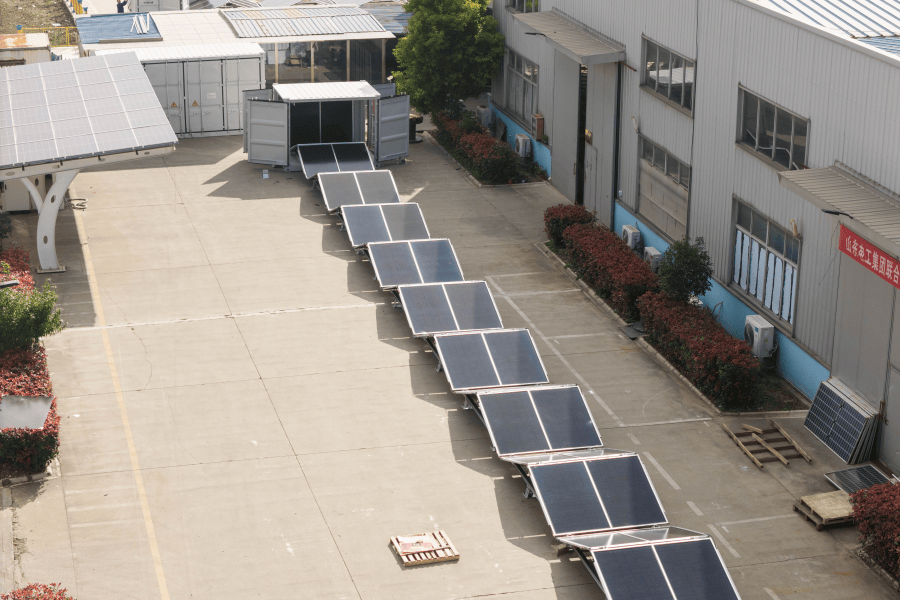
This is where the concept of the Rapid Deployment Lithium Battery Storage Container comes in. It's not just a battery in a box. Think of it as a plug-and-play power plant that arrives on a flatbed truck. The core idea is speed and simplicity. We're talking about moving from a fossil-fueled headache to a clean, silent, software-controlled power source in a matter of days, not months.
The agitation? Every day your temporary power solution is delayed, inefficient, or over budget, you're burning capital. You're also missing a massive opportunity to integrate on-site renewables (like a small solar array), shave peak demand charges from the grid if you have a permanent connection, and future-proof your operation. The modern construction site is a hub of electric equipment C from tools to light towers to site offices. Powering them with a 20th-century solution just doesn't make sense anymore.

The Installation Blueprint: A Step-by-Step Walkthrough
So, how does it actually get done? Having overseen dozens of these deployments, I can tell you the process is methodical. The key is planning. Here's the real-world, boots-on-the-ground sequence:
Phase 1: Pre-Site Deployment (The Paperwork & Prep)
- Site Assessment & Permitting: Before the container even leaves our facility, our team works with yours. We look at geotechnical reports, local codes (like the NFPA 855 standard in the US or equivalent IEC standards in Europe), and utility interconnection rules. This is where our UL 9540 and IEC 62619 certifications aren't just brochures C they're the blueprint for approval.
- Foundation & Civil Works: A simple, level concrete pad or compacted gravel base is prepared. One major advantage? The container is its own enclosure. You don't need to pour a giant foundation or build a dedicated building.
Phase 2: Delivery & Positioning (The Big Day)
- Transport & Craning: The container is delivered as a single unit. Using a standard crane, it's positioned onto the prepared pad. Honestly, I've seen this done in under 4 hours from truck arrival to "set." The units are designed for this C with integrated lifting points and a rugged, weatherproof exterior.
- Anchoring & Grounding: Once positioned, it's mechanically anchored and connected to the site's grounding system. This is non-negotiable for safety and compliance.
Phase 3: Connection & Commissioning (Bringing It to Life)
- Electrical Hookup: Certified electricians connect the AC output of the BESS to your site's main distribution panel. For hybrid setups, connections to a generator or solar inverter are made here.
- Communications & Software Setup: This is the magic. We connect the system to its onboard energy management system (EMS) and often to a cloud-based monitoring portal. Within an hour, the site manager can see the state of charge, power flow, and system health on a tablet.
- System Testing & Go-Live: We run a full protocol C testing charge/discharge cycles, safety shutdowns, and grid (or generator) interaction. Only after passing every check is the system handed over.
Beyond the Box: The Tech That Makes It Work
Let's demystify some tech terms. When we talk about optimizing a system like this, we're really talking about three things:
- C-rate: Simply put, this is how fast the battery can charge or discharge. For a construction site, you might need a high C-rate to start a big motor (a high power surge), but then a lower, steady output for all-day tools. The right cell chemistry and system design balance this.
- Thermal Management: This is the unsung hero. Lithium batteries need to stay in a happy temperature range. Our containers use an active liquid cooling system - it's like the climate control in a high-end server room. It ensures performance on a 100F Texas day or a -10C German morning, and it's the biggest factor in long battery life.
- LCOE (Levelized Cost of Energy): This is your true cost of power over the system's life. With diesel, your LCOE is volatile, tied to fuel prices. With a BESS, your "fuel" is cheaper grid power at night or free solar. Over a 2-year project, the LCOE of a BESS hybrid system is often 30-50% lower. That's not a guess; it's what I've calculated on closed projects.
Real-World Proof: A Case from California
Let me give you a real example. We worked with a mid-sized developer on a 14-month commercial build in San Jose. Their challenge: strict noise limits after 6 PM, high grid demand charges, and a mandate to reduce diesel use.
The solution was a 500 kWh Highjoule Rapid Deployment Container paired with a 200 kW backup generator. Here's what happened:
- The BESS provided silent overnight power for security and charging, eliminating the need for a generator run after hours.
- During the day, it "peak-shaved" C discharging when grid demand (and cost) was highest, cutting their demand charges by over 40%.
- The generator only kicked in for the absolute highest power needs, slashing fuel consumption by nearly 70%.
The system was installed and operational in 8 days from pad completion. The project manager's feedback? "It was like having a utility substation we could control. The power was just?- always there."
Your Next Step: Asking the Right Questions
If you're considering this for your next project, don't start with "what's the price per kWh?" Start with these questions instead:
- What is my true current cost of temporary power (fuel, rental, maintenance, carbon)?
- What are the local codes (UL, IEC, IEEE 1547) that will govern this installation?
- Is there a path to use this asset on the next site, or even as part of the building's permanent microgrid?
The shift to rapid deployment BESS isn't just about being greener. It's about being smarter, faster, and more in control of your project's destiny. What's the one power constraint on your current site that, if solved, would change everything?
Tags: Construction Site Power UL Standard BESS LCOE Rapid Deployment Europe US Market
Author
James Zhang
20+ years agricultural energy storage engineer / Highjoule CTO