
Step-by-step Installation of Smart BMS Monitored BESS for Mining Operations in Mauritania
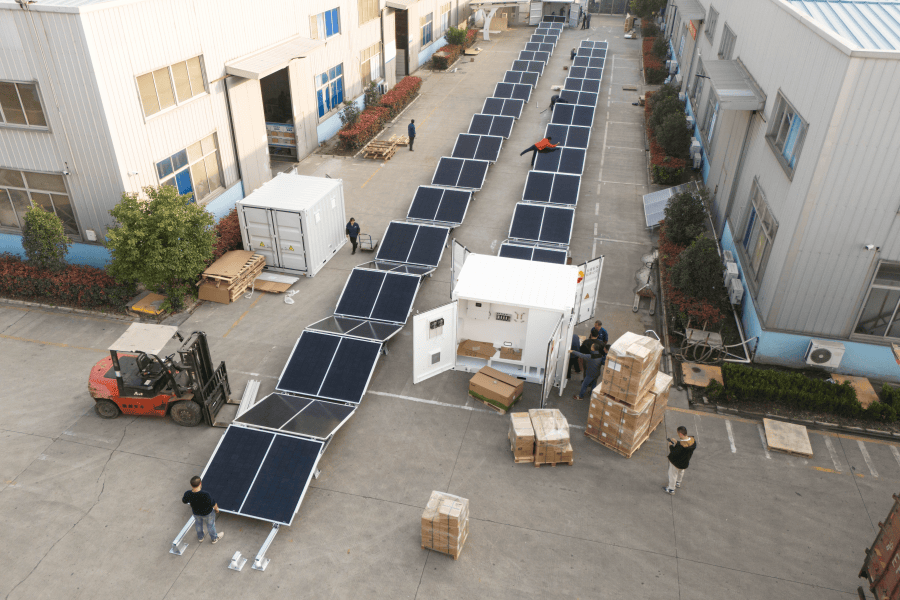
Table of Contents
- The Real Challenge: More Than Just Buying Batteries
- Why "Just Plug It In" Is a Recipe for Headaches (and Higher Costs)
- A Better Way: The Step-by-Step Smart BESS Blueprint
- Phase 1: The Foundation C It Starts Long Before the Shipment
- Phase 2: The Critical Installation Window
- Phase 3: The Brain Comes Online C Smart BMS Activation
- From the Field: What Smart Monitoring Really Means for Your Bottom Line
- So, What's Your Next Step?
The Real Challenge: More Than Just Buying Batteries
Honestly, after two decades on sites from Nevada to Namibia, I can tell you this: the biggest mistake I see companies make is thinking a Battery Energy Storage System (BESS) is a simple product purchase. It's not. It's a process. A critical, step-by-step integration that determines whether your system becomes a resilient asset or a costly liability. This is especially true for demanding, remote operations like mining. We're not talking about a quiet suburban microgrid; we're talking about operations where power reliability is safety, productivity, and profit, all rolled into one.
Why "Just Plug It In" Is a Recipe for Headaches (and Higher Costs)
Let's agitate that point a bit. I've seen firsthand what happens when the installation process is an afterthought. A client - let's call them a mid-tier mining operator in the Southwestern US - bought a "certified" containerized BESS. On paper, it checked all the UL and IEEE boxes. But the on-site team treated it like another piece of heavy machinery. The foundation wasn't perfectly level. The cooling intake was placed near a heat exhaust. The communication cables were run haphazardly.
The result? Within six months, the system's thermal management was constantly fighting an uphill battle. Cells in one module were consistently 5C hotter than others. The C-rate - essentially how hard you can charge or discharge the battery safely - had to be artificially limited to prevent overheating, crippling the peak shaving capability they paid for. Their expected Levelized Cost of Energy (LCOE) savings eroded by nearly 30% due to reduced efficiency and unexpected maintenance. The data from IRENA shows that poor system integration and operation can slash a BESS's value proposition by 20-40% over its lifetime. That's a terrifying financial leak.
A Better Way: The Step-by-Step Smart BESS Blueprint
So, what's the solution? It's a meticulous, phase-gated approach centered on a Smart BMS (Battery Management System) from day one. The BMS isn't just a dashboard; it's the central nervous system. And its effectiveness is 100% determined by how well the physical body - the BESS - is set up. Let me walk you through the blueprint we follow, refined from projects like our deployment for a mining operation in Mauritania, where grid instability is a daily reality and environmental extremes are the norm.
Phase 1: The Foundation C It Starts Long Before the Shipment
This phase is about eliminating surprises. For our Mauritania project, it began with a joint site assessment. We weren't just looking for a flat spot of dirt.
- Site & Civil Works: We analyzed soil reports, planned drainage for rare but intense rains, and designed a foundation that accounted for thermal expansion. Everything was leveled to within 2mm tolerance. This isn't over-engineering; it prevents mechanical stress on the battery racks that can lead to internal connections loosening over time.
- Integration Design: We mapped every cable run - power and data. A Smart BMS needs clean, reliable data from hundreds of sensors. We specify shielded, conduit-protected cables for all BMS communications to prevent electromagnetic interference from heavy mining equipment. This upfront planning prevents a nightmare of "noise" in your data later.
- Pre-Delivery Factory Testing: Every Highjoule system undergoes a full performance run-in at our facility, aligned with IEC 61427-2 standards. We simulate the site's ambient temperature range and charge/discharge cycles. The Smart BMS logs every cell's behavior. We're not just testing the battery; we're calibrating its brain for its future home.

Phase 2: The Critical Installation Window
Now the hardware arrives. This is a tightly choreographed operation, not a free-for-all.
- Uncrating & Placement: Using certified rigging gear, the container is placed on its foundation. Immediate checks: door swing clearance, emergency access paths, and verifying all shipping locks are removed from internal components.
- Mechanical & Electrical Connection: Busbars are torqued to exact specifications (with calibrated tools). A loose connection increases resistance, which creates a hot spot - the #1 enemy of battery life. HVAC systems are commissioned independently to ensure the thermal management system is ready to protect the batteries before they are energized.
- The First "Heartbeat": Before connecting to the main grid or solar field, we perform an initial low-voltage power-up. This is the first real test of the Smart BMS in its new environment. We check that every voltage and temperature sensor is reporting accurately. It's like waking up the system gently and making sure every nerve is firing correctly.
Phase 3: The Brain Comes Online C Smart BMS Activation
This is where the magic happens. With the physical system verified, we fully activate the Smart BMS's monitoring and control algorithms.
- Baseline Profiling: Over a 72-hour period, the system runs through diagnostic cycles. The BMS establishes a "health baseline" for every cell block - its resting voltage, internal resistance, and temperature gradient. This baseline is unique to this specific installation and becomes the reference for all future anomaly detection.
- Grid Synchronization & Load Testing: We gradually introduce real loads, from ancillary mining equipment to full-site peak shaving simulations. The Smart BMS isn't just watching; it's actively balancing cells, optimizing charge/discharge C-rates in real-time based on actual thermal data, and logging performance against the projected LCOE model.
- Handover & Training: We don't leave with just a manual. The on-site engineers get a hands-on walkthrough of the BMS interface. We show them not just how to read alarms, but how to interpret trends - like why a gradual rise in a module's internal resistance might indicate it's time to schedule proactive maintenance during the next planned shutdown.
From the Field: What Smart Monitoring Really Means for Your Bottom Line
Let's get practical. What does this process buy you? In Mauritania, the mine's managers now see their BESS not as a "black box" but as a predictable asset. The Smart BMS flagged a slight imbalance in one string early. It wasn't a failure, just a 2% deviation from the baseline. Because we had planned for it, the on-site team could schedule a correction during a routine maintenance window, avoiding what would have likely escalated into a forced outage months later.
This is the expert insight I want to leave you with: A properly installed, smartly monitored BESS shifts your operational model from reactive to predictive. According to a NREL analysis, predictive maintenance driven by advanced BMS data can extend battery life by up to 25% and slash O&M costs. You're not just preventing fires; you're preventing the slow bleed of degraded performance that steals from your ROI every single day.
At Highjoule, our designs, from the cell chemistry up, are built for this level of scrutiny. Our systems are UL 9540 and IEC 62619 certified, which gives you the safety ticket to play. But our installation methodology is what ensures you actually win the game - hitting your target LCOE and achieving the energy security you invested in.

So, What's Your Next Step?
If you're evaluating BESS for a critical operation, my advice is simple: grill your vendor on their installation methodology. Ask for their step-by-step project plan. Ask how their Smart BMS integrates with that plan from the pre-pour concrete stage. The quality of their answers will tell you everything. Because in the end, the most advanced battery in the world is only as good as the process that brings it to life.
Tags: UL Standard BESS Battery Energy Storage System Energy Security Smart BMS Mining Operations IEC Standard
Author
James Zhang
20+ years agricultural energy storage engineer / Highjoule CTO