
Step-by-Step Installation Guide for Tier 1 Battery Cell BESS at EV Charging Stations
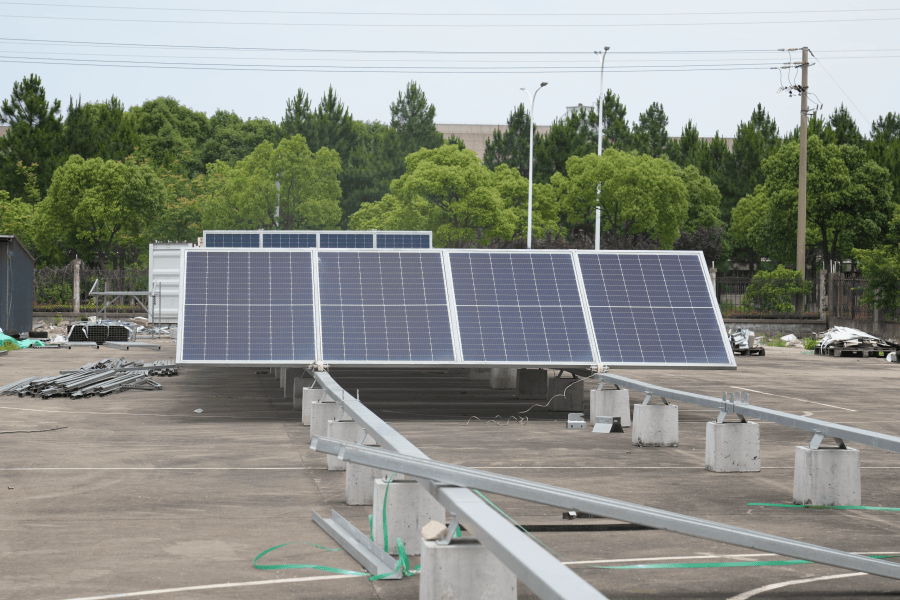
Table of Contents
- The Real Problem Isn't Just Power, It's Predictability
- The Staggering Cost of Waiting and Getting It Wrong
- The Solution: A Methodical, Standards-Driven Installation Blueprint
- A Real-World, Step-by-Step Installation Guide
- From Blueprint to Reality: A Case Study from California
- Expert Insights: What We Look For on Site
- Why Getting This Right Matters for Your Bottom Line
The Real Problem Isn't Just Power, It's Predictability
Let's be honest. If you're looking at integrating a Battery Energy Storage System (BESS) with your EV charging station, you already know you need more power. The real headache, the one I've seen firsthand from Texas to Bavaria, isn't the "if" but the "how." You're dealing with a double whammy: the unpredictable, high-cost demand spikes from fast chargers and the equally unpredictable process of actually installing a robust, safe, and compliant storage system. Many operators jump in, focusing on the battery's specs, only to find the installation phase is where budgets bleed and timelines stretch. The gap between a Tier 1 battery cell on a data sheet and a fully operational, UL-certified system on your site is where projects succeed or fail.
The Staggering Cost of Waiting and Getting It Wrong
Think about it. A stalled or botched installation doesn't just delay your revenue-generating EV hub. It exposes you to massive demand charges from the utility. According to the National Renewable Energy Lab (NREL), unmanaged EV charging loads can increase a site's peak demand by over 100%, leading to crippling monthly fees. On the safety side, a rushed installation that cuts corners on thermal management or grounding isn't just a compliance issue - it's a severe fire and liability risk. I've been called to sites where the "install" was basically a drop-and-plug affair, with zero consideration for local codes (NEC, IEC) or future maintenance access. The agitation here is real: poor planning turns a capital investment into a capital liability.
The Solution: A Methodical, Standards-Driven Installation Blueprint
This is where a disciplined, step-by-step approach for installing a Tier 1 cell-based BESS becomes non-negotiable. It's the bridge between premium hardware and premium performance. At Highjoule, we don't just ship containers; we deploy a repeatable, standards-driven process that treats every site with the rigor it deserves, whether it's a commercial fleet depot in Ohio or a public charging plaza in Germany. The goal is a system that's not just operational, but optimized for safety, longevity, and the lowest possible Levelized Cost of Storage (LCOS).

A Real-World, Step-by-Step Installation Guide
Forget the generic checklists. Here's what a proper, field-tested installation sequence looks like, tailored for the unique demands of an EV charging site.
Phase 1: Pre-Site & Design (The Most Critical Phase)
- Deep-Dive Site Assessment: This goes beyond measuring square footage. We analyze soil reports for foundation specs, map all utility corridors, and model shading and airflow for thermal efficiency. For EV sites, we simulate concurrent charging scenarios to right-size the BESS.
- Grid Interconnection Dance: We initiate utility interconnection applications immediately. This is often the longest lead-time item. Our team prepares all required studies (like those for IEEE 1547-2018 compliance) to avoid back-and-forth.
- Local Code Alignment: We don't just follow UL 9540 and IEC 62933. We cross-reference every nut and bolt with the local Authority Having Jurisdiction (AHJ) requirements. This upfront work prevents painful rework later.
Phase 2: Physical Deployment & Integration
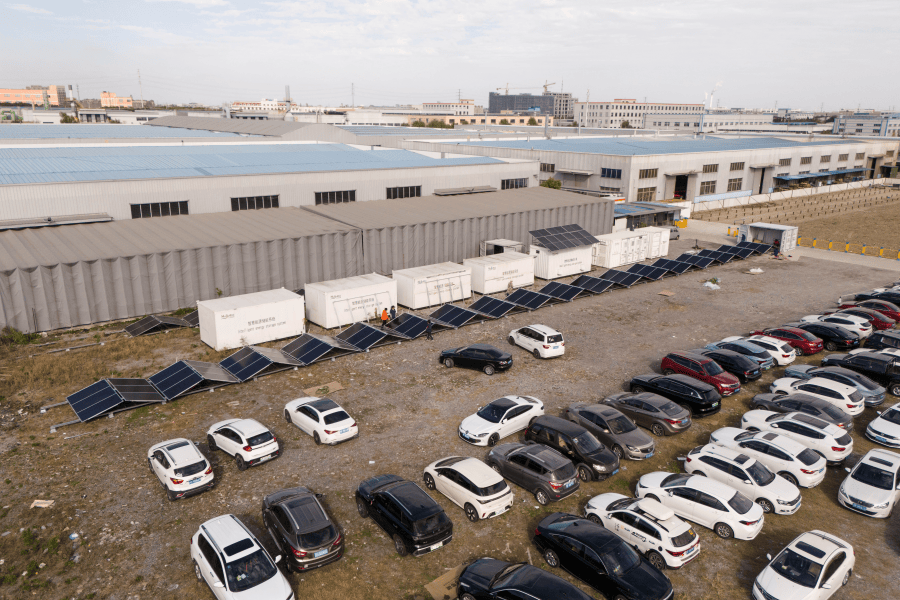
- Foundation & Placement: Whether it's a concrete pad or a seismic-rated platform, we ensure it's perfectly level and anchored. For our containerized solutions, we always plan for crane access and safe rigging paths.
- Electrical Marriage: This is where precision is king. We bus bar every high-current connection to the spec, use only torque wrenches on lugs, and implement a meticulous cable management system. The integration with the EV charging power controllers is done via a hardened communication protocol, ensuring the BESS responds in milliseconds to demand spikes.
- Thermal & Safety Systems: We commission the HVAC and thermal runaway venting systems independently before energizing the batteries. Gas detection systems and fire suppression (like FM-200) are tested to the local fire marshal's satisfaction.
Phase 3: Commissioning & Handover
- Staged Energization: We bring the system online in controlled stages - auxiliary power, then DC bus, then full AC coupling. Each step is logged and verified.
- Performance Validation: We don't just check for "power on." We run the BESS through its paces, simulating real EV charging load profiles to verify response time, round-trip efficiency, and that all safety setpoints function.
- Owner Training & Documentation: We hand over a living digital twin of the as-built system, not just a paper manual. We train your onsite staff on daily operations and basic troubleshooting.
From Blueprint to Reality: A Case Study from California
Let's make this concrete. We recently deployed a 2 MWh system using Tier 1 NMC cells for a logistics company in California's Central Valley. Their challenge? They needed to power 12 new fleet-charging stalls without triggering a $500k utility substation upgrade.
The Highjoule Process: Our pre-site assessment revealed tricky soil conditions. We designed a specialized gravel bed foundation, saving weeks of concrete cure time. During the interconnection process with the local utility, our pre-submitted protection studies (aligned with IEEE 1547) got approved in one review cycle. The real test came during commissioning: we simulated 12 Semis plugging in simultaneously. The BESS seamlessly picked up the 1.8 MW load spike, keeping the site's grid draw flat. The client avoided the upgrade and now saves over $45,000 monthly on demand charges. The system's performance data is monitored remotely by our team, flagging a minor cooling fan anomaly before it became an issue.
Expert Insights: What We Look For on Site
Here's the insider perspective I give my own project managers:
- On C-rate for EV Charging: Everyone wants high power (a high C-rate). But for a BESS that will cycle daily, pushing the C-rate constantly is like always driving your car in the redline. It degrades the Tier 1 cells faster. We design for the sustained C-rate needed, with a comfortable peak buffer. This balance is key to hitting the projected 10+ year lifespan and low LCOS.
- On Thermal Management: The ambient temperature in a BESS container is one thing; the core temperature of a cell module is another. We instrument both. A well-designed system keeps cell-to-cell temperature differentials below 3C. Honestly, I've seen more performance loss from poor internal airflow than from the battery chemistry itself.
- On LCOE/LCOS: The Levelized Cost of Energy from your BESS isn't just about the cell price. It's the total capex plus installation cost divided by the total, reliable energy throughput over its life. A flawless, code-compliant installation maximizes throughput and minimizes downtime, which is the biggest lever you have to pull down that LCOS number after the equipment is bought.

Why Getting This Right Matters for Your Bottom Line
So, what's the takeaway? Viewing the Step-by-step Installation of a Tier 1 Battery Cell BESS as a tactical checklist is a mistake. It's a strategic business process. It's the difference between a system that merely functions and one that delivers a resilient, safe, and profitable backbone for your EV charging operations for the next decade. It turns your storage asset from a cost center into a predictable, grid-independent revenue protector.
The market is moving fast. Are you confident your next BESS installation will be a foundation for growth, or a source of constant headaches? What's the one installation hurdle you're most concerned about for your site?
Tags: LCOE Optimization UL Standards EV Charging Infrastructure Tier 1 Battery Cells US Europe Market Grid Stability BESS Installation
Author
James Zhang
20+ years agricultural energy storage engineer / Highjoule CTO